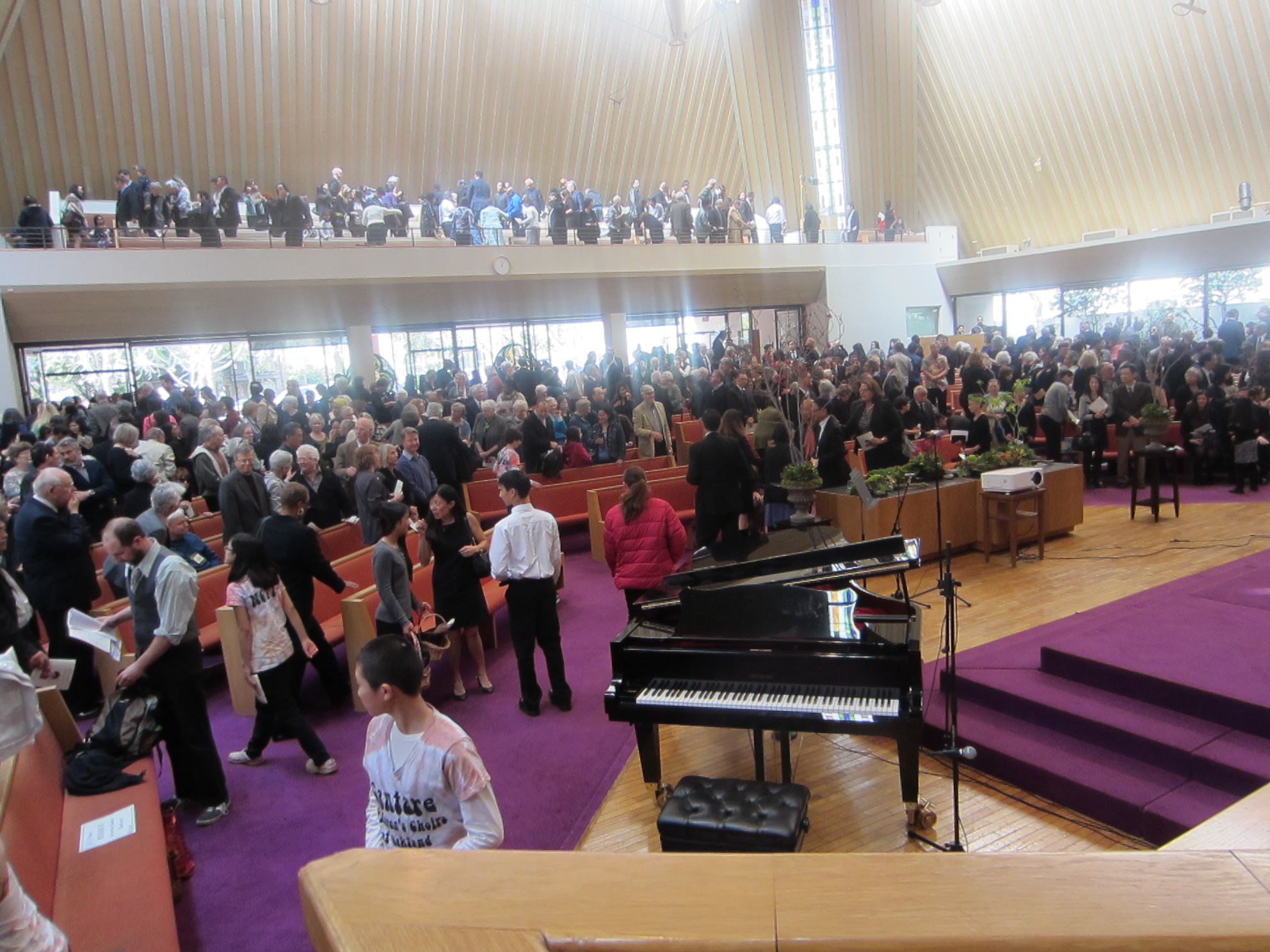
As shared at her memorial service, First Presbyterian Church, Berkeley, March 15, 2013
My Aunt grew up in Oakland’s Chinatown mostly in the 1950s and 60’s. Chinatown was a quite different place back then.
In those days, a child age six or ten or twelve could roam the streets carefree, past house after house with unlocked front doors, knowing every neighbor, walking over to Swan’s Market or Housewive’s Market or to one of the downtown movie theaters, or to endless hours at Lincoln Park or Harrison Railroad Park.
In those days, the school lunch bell meant running home for a hot meal and running back even faster to the school playground before lunchtime was over.
In those days, Chinatown always had plenty of street parking.
In those days, Chinatown still had the Presbyterian Ming Quong home for girls and the Baptist Chung Mei home for boys, these being children who had lost their parents or otherwise did not have families to care for them; and some of these boys and girls were my Aunt’s classmates. Meanwhile some houses still had gold star service flags in their windows, honoring sons who had been lost in the war.
In those days, Chinatown only had a relatively small numbers of educated Chinese American professionals. At the local elementary school, some years only perhaps the Kindergarten teacher would be ethnic Chinese (or “Oriental,” as we were called then).
In those days, up til the year my Aunt was born, it was still technically against the state constitution to hire Chinese as state employees. Just the year before she was born the federal Chinese Exclusion Act was repealed.
It those days, most neighborhoods in Oakland outside of Chinatown were still largely closed to racial minorities. The year my Aunt turned 23 was the year Oakland elected its first Chinese American city councilman, Dr. Raymond Eng. She herself was part of the first generation of racial minority children to be widely encouraged to think about college.
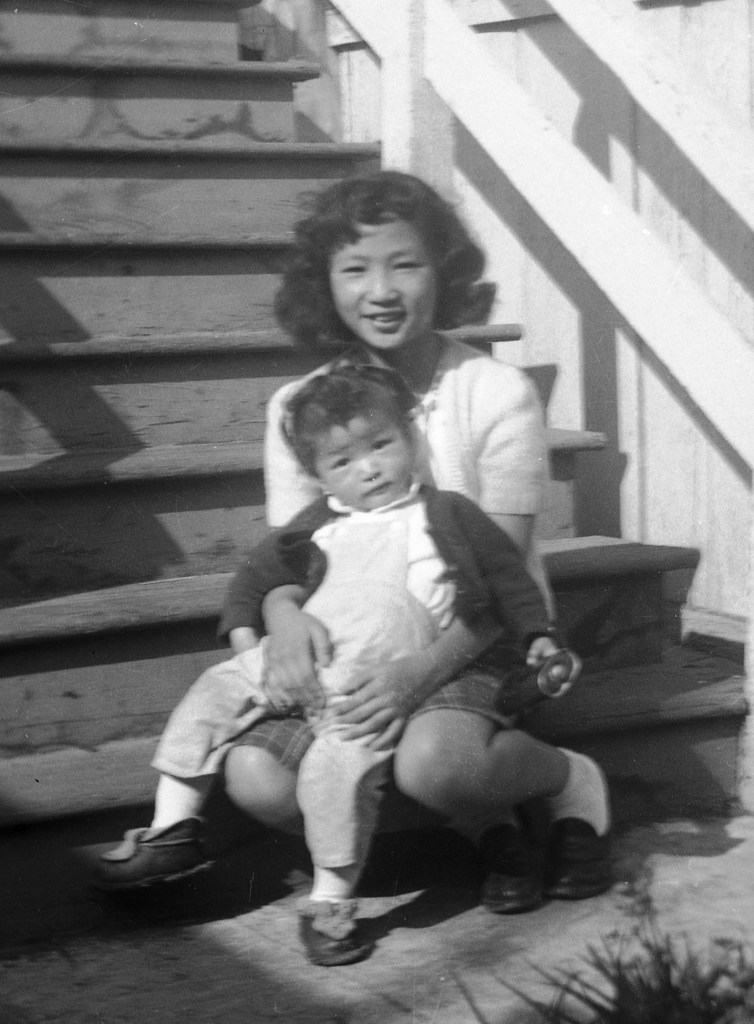
In those days there was quite a bit of small manufacturing in Chinatown, such as the numerous sewing factories, and including the original Corn Nuts snack food factory, right there on 7th St. next door to the family house. One night, when my Aunt was still a baby, there was a fire at that Corn Nuts factory next door, and my Aunt Jenny had to wheel her baby sister’s crib to safety.
In those days you could not only buy a live fish in Chinatown and have it cleaned while you waited and on your dinner table within the hour; you could also buy a live chicken the same way. And this would be the one chicken dinner a year my Aunt and her siblings would each get for their birthdays, along with a gift of some new home sewn clothes.
In those days Chinatown was connected to the produce district and the waterfront, but in the 1950’s hundreds of houses and businesses were demolished for the construction of what is now Interstate 880, cutting through one whole side of the neighborhood, including the block right behind my Aunt’s house.
As a child, my aunt had to be brought across the Bay on an all-day excursion on trains and buses for treatments for her severe childhood eczema. Now today, Chinatown has Asian Health Services, which is a national model for multilingual community-based health care.
So Oakland’s Chinatown has changed in many ways since my Aunt grew up there. But in other ways, the Chinatown my Aunt knew as a child is still there.
On 7th St. [#227] still stands the old Victorian house where she and her family lived from the time she was a newborn til when she went away for school and then marriage.
There in the Chinatown stores you can still buy the sacks of rice, bok choy, salted fish, pork, eggs, and variety meats she ate as a child; you can still buy the medicinal herbs she took, you can still sit down for the same noodles and rice dishes her siblings took her out to enjoy after they started working.
There in Chinatown is still the Baptist [1906] church where she served and worshipped and mentored other girls, along with the historic Presbyterian [1878], Methodist [1887], and Episcopal churches [1906/1974], all of them over a century old, along with older and newer Buddhist temples.
There in Chinatown the family associations still serve the community, and the sound of mah jong tiles still clacks from the upstairs windows.
There in Chinatown you can hear both Cantonese and its various dialects still spoken by young and old alike. There, kids still go to Chinese lessons at the Chinese Community Center as my Aunt did, where she learned enough Chinese to later write letters home to her mother.
Lincoln Elementary School is still there, now in its newer and newest buildings, the same school she went to as a child, and then returned to years later as its principal, leading it to become a California Distinguished School, and putting it on a trajectory to go on shortly after she retired to become a Title I Achievement School, and then in 2010 a National Blue Ribbon School, which is the U.S. Department of Education’s highest honor, earned by only two other schools in the entire Bay Area that year.
There today at Lincoln Elementary and throughout Chinatown are still kids just like my Aunt was more than a half-century ago: young American Born children of Chinese immigrant parents, kids who have to translate the mail for their parents just as she did; kids who perhaps still have to run interference as she did when their parents take them out shopping and whisper to them to “Ask to make a little cheaper.”
In 1994 my Aunt and a group of us traveled to southern China, to the tiny farming village where Caroline’s mother was from. It was the first visit back in two and three generations. There the rice fields and water buffalo and simple brick houses had not changed in all that time. From there my Aunt’s mother came in 1930 to settle in Oakland, to raise five children.
So it was that my Aunt came from what might seem like a quite small world–mid-century Oakland Chinatown–but it was actually a quite big world, a world she was proud to have come from and proud to return to, and which she made a better place as a child and as an adult.
I would have been proud of my Aunt even if she had not been my aunt but simply a name and face in the Oakland Tribune. But she was my Aunt, she made my life better, and my world better; and I, like you, miss her very much.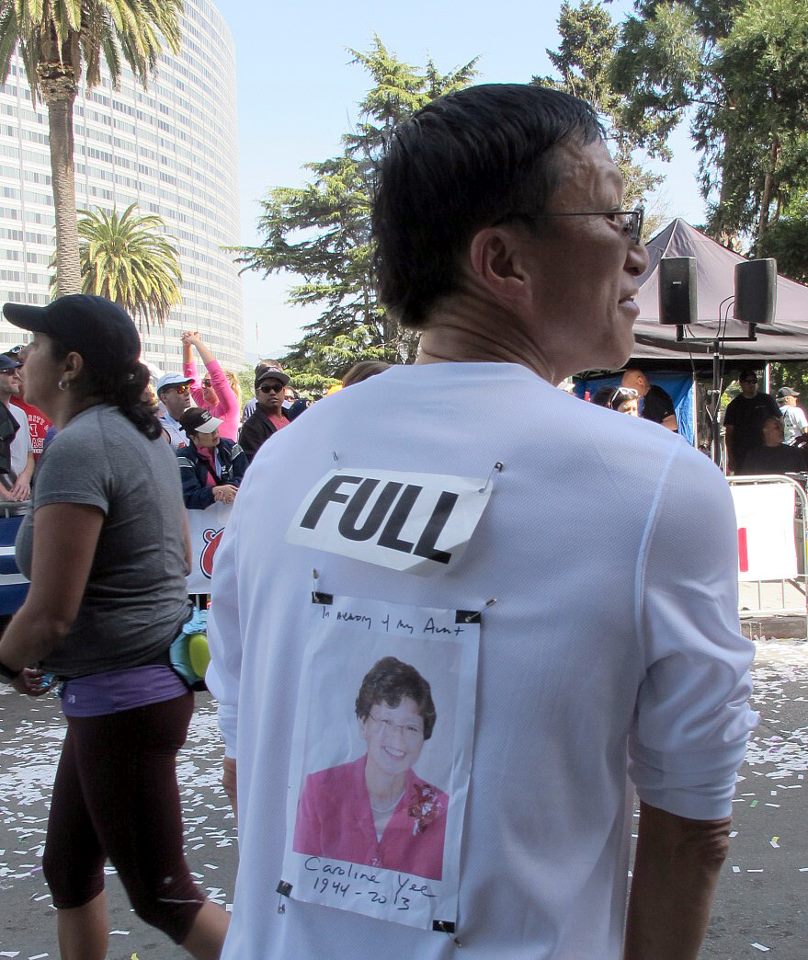
 Russell Yee