My history and hopes with BART
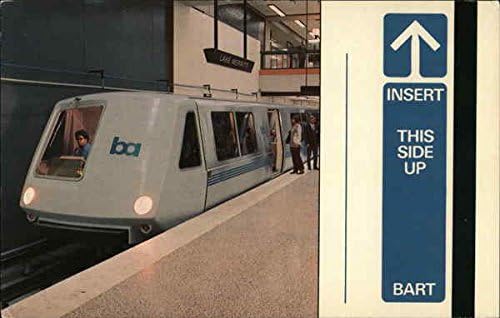
I had never heard such sounds or felt such sensations before: a synthetic “boing” and then a modern “whoosh.” After a moment’s pause, there was a quiet electric hum, and then an impossibly smooth acceleration pushing me back into the cantilevered, upholstered seat. It was magical.
I was a boy of eleven taking my first ride on BART. The system was still so new that only half of the Fremont-Richmond line was open. It was actually my first ride on any rapid transit anywhere, and I was loving it.
BART was America’s first all-new regional rapid transit system since the New York City subway. It was the first in the world to use magnetic fare cards, dispensed from gleaming stainless steel machines made by IBM, with glowing nixie-tube displays worthy of NASA. The announcement signs were the first dot-matrix displays I’d ever seen in person. The robotic sounds of the orange entry gates were a world away from the clank of metal turnstile arms. The brushed aluminum train cars, the modernist overhead track structures—it was all the future here and now.
At the Lake Merritt Station was the operations center. In the lower plaza you could look through portholes and see the darkened room with a wall of glowing lights, and a few wizards (in coats and ties) silently monitoring the computers. In our present age of flat screens, it’s hard to remember how a sheet of silk-screened plexiglas, some colored tape, and some miniature light bulbs could look so absolutely dazzling: It was–could you believe it?–a train system run by computers!

And best of all, this all wasn’t Apollo or Spacelab. This wasn’t predictions in the pages of Popular Science or special effects in 2001: A Space Odyssey. This wasn’t even an “E” ticket ride at Disneyland. No, this was public transportation in my home town. The Fruitvale Station where I started my first ride was not far from my family’s house. The Lake Merritt Station where the operations center glowed was just a couple blocks from my family’s church. BART was mine to use, a brand new part of my world. My city, my region had given me this gift of mobility all over the Bay Area, in the nicest and most modern transit system on the planet.
At the time, AC Transit bus drivers had coin dispensers on their belts to click out change as needed; or one could pay with a special copper token. Destination signs on the buses were rolls of fabric, hand cranked by the driver to display the current route. Paper transfer tickets were hand adjusted in their holder and torn off to indicate their expiration time. As bus systems went, it was actually notably well-run, and a national model of regional service. But it did not make you think of the future.
BART was not the first public rail system in the East Bay. If I had been born a decade or two earlier, I might have memories of riding the Key System electric light rail trains, perhaps even across the lower deck of the Bay Bridge. While a manual system, it was state-of-the-art in its day, and surely fully dazzling at the time.

Now looking back, BART clearly oversold itself. Trains were to be so frequent that no one would ever need to stand. (The original cars had no grab bars or straps.) The operation was to be so cost-efficient that there would be no need for display ads to supplement the fare revenue. Now, the last of the carpet and the fabric upholstered seats are almost all gone. Even the BART headquarters building is now gone, the victim of an earthquake-unready (even if quite dramatic) design.
Nevertheless, the message BART conveyed to my boyhood sense of the world was this: we should use our best for the common good. As Californians, as Americans, we chose here to put our best in the public realm. We chose to use the new and beautiful for the general public, and not only as luxuries for the privileged few. The newest, nicest conveyance in the world was available to a boy of eleven for the price of a train fare. This was not some kind of conformity-dictating dependency on government. It was just the opposite: an empowering, freeing asset providing a lifetime of both physical and imaginative mobility.
So I can’t wait for my first ride on the new Oakland Airport Connector, now under construction. The cars will be cable-powered, and so will be as quiet as can be. The new, open-lattice trackway promises beautiful, brand new views of my city.

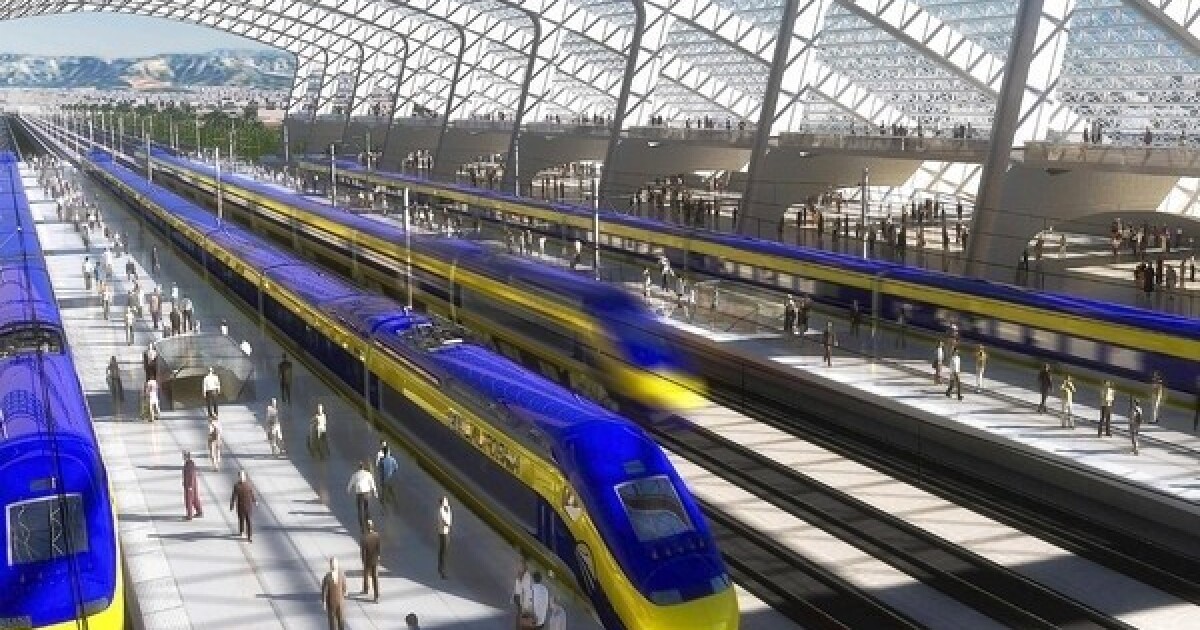
And I will wait as long as I have to for my first ride on the California High Speed Rail system. I don’t understand why anyone thinks that fighting to stay awake while dodging trucks on Interstate 5 is some kind of superior freedom. Yes, the system will cost at lot. (BART originally cost $1.6-billion to build, this in the era of the Six Million Dollar Man.) But during the Great Depression we built two epic bridges, each widely considered unbuildable. I hope I will have grandchildren someday, and that they will board the new, swift trains to points distant. I hope they will be able to take for granted their parents’ and grandparents’ imagination and leadership when it came to the common good.
 Russell Yee