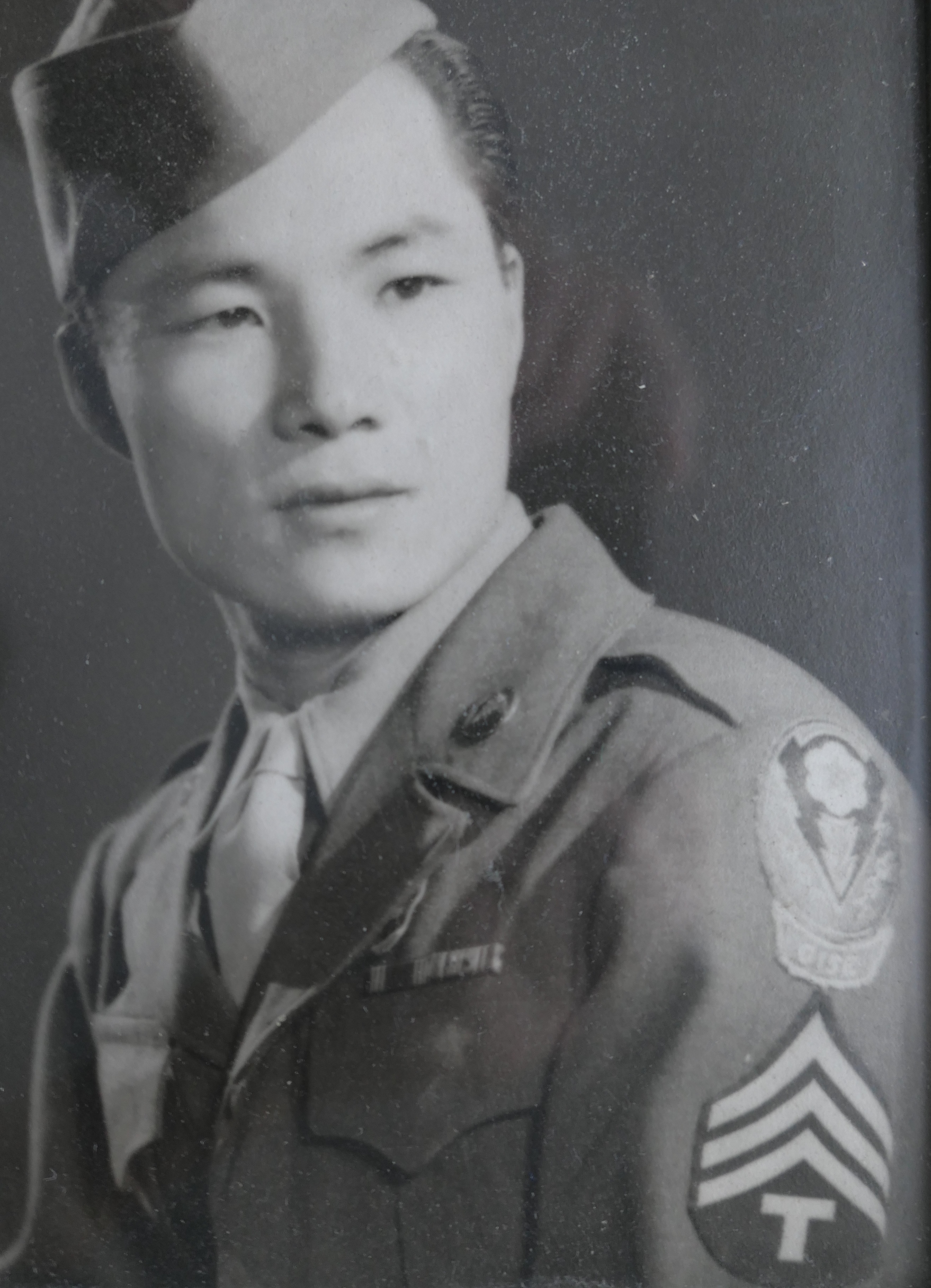
My late father-in-law was a sergeant in the U.S. Army, serving mostly as a cook for the 203rd General Hospital, formed at Fort Lewis, Washington; deployed to England to treat D-Day casualties, and then relocated to Garches, France outside of Paris. It became the largest wartime medical facility in the European theater.
(More about his Army service here.)
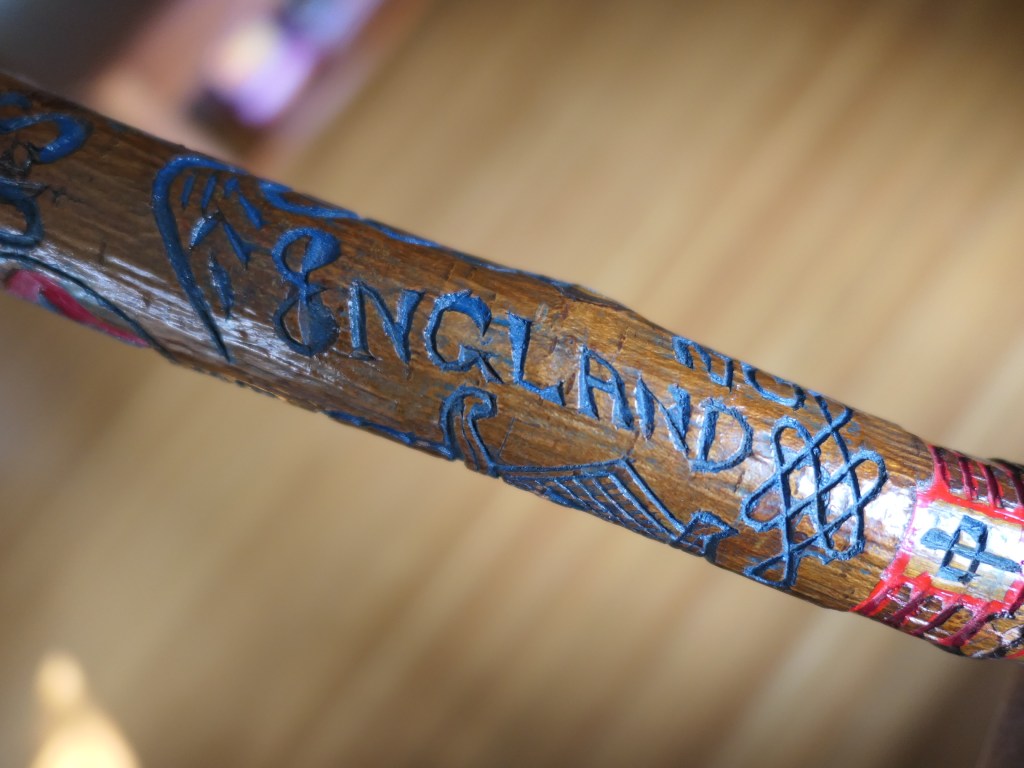
In his travels and deployments he carved this walking stick, featuring places and people he wanted to most remember.
On top of his artistry and craftsmanship, I’m struck by his completely happy and comfortable sense of being a bicultural Chinese American, expressed in his use of English and Chinese, his use of traditional Chinese blessings, and his mix of both Army insignia and traditional Chinese decorative motifs.
He had immigrated in his mid-teens from a poor, rural village in southern China, and didn’t pursue any formal education here, so his bilingual abilities and written Chinese are all the more impressive. He was in his late 20s the years he served.

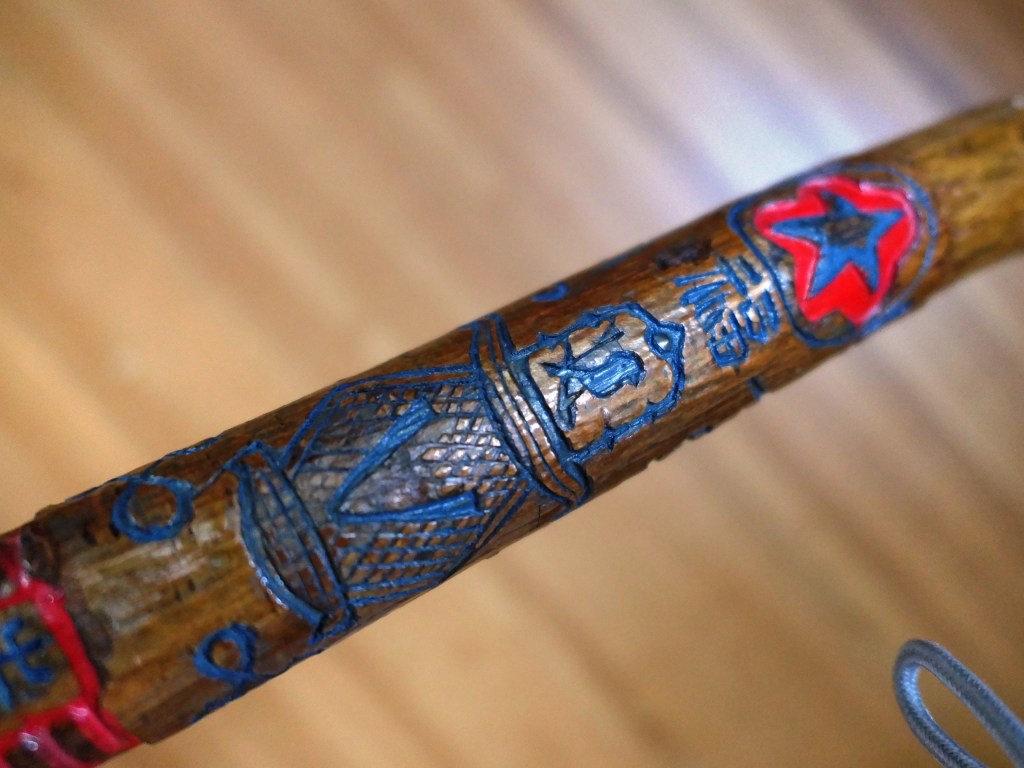
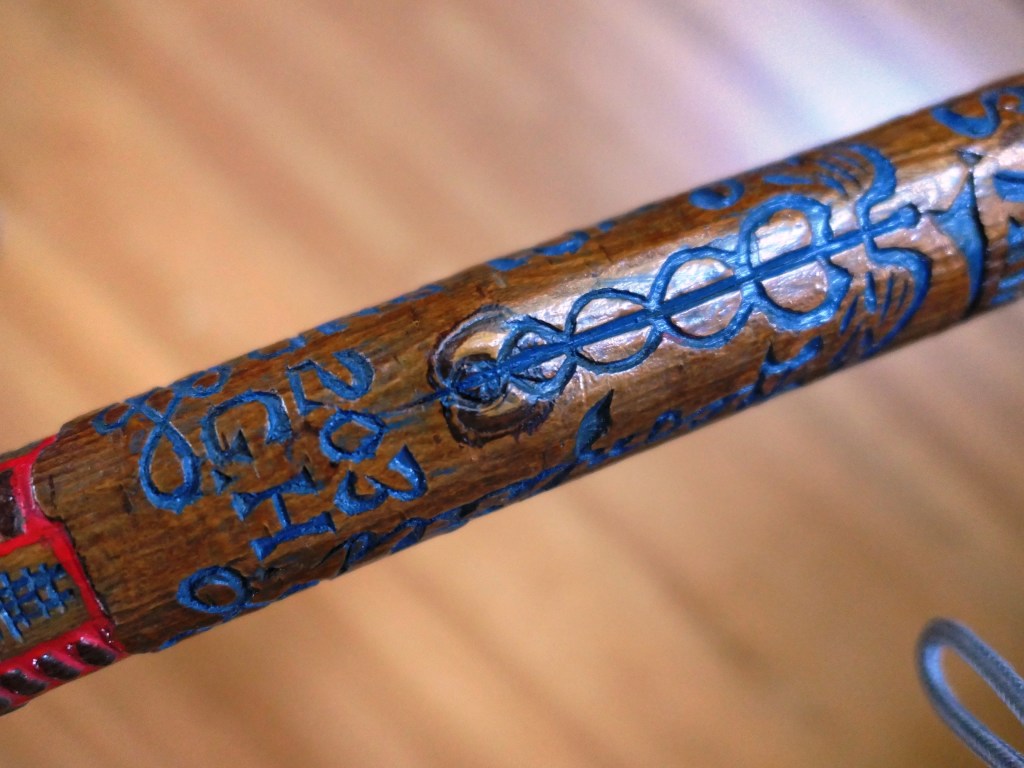

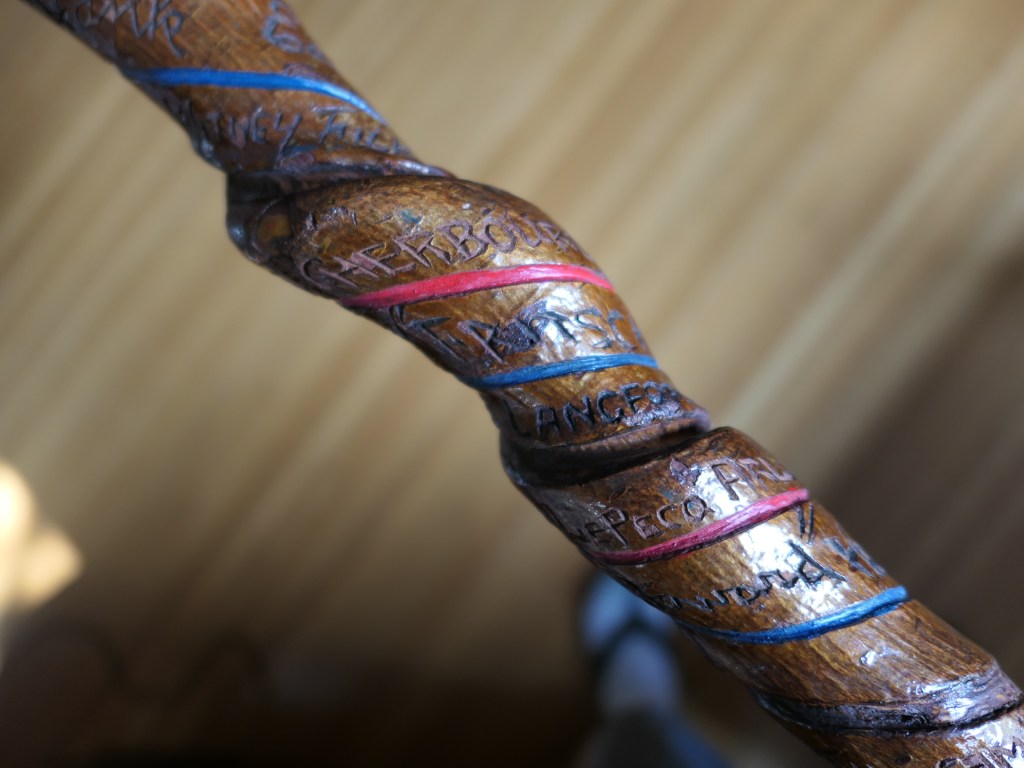
Text:
U.S. ARMY
ENGLAND Camp Liconfield 203 G[eneral] H[ospital]
[in Chinese] Prosperity
[in Chinese] May China live 10,000 years*
[in Chinese] January 31 19XX**
[in Chinese] Victory Wood Pole
IN ENGLAND AND PETWORTH SWINDON Burford EXETER
IN FRANCE CHERBOURG PARIS GARCHES LE PECQ ARLON BELE METZ TOUL CAMP PITTSBURG
Howard Henry WOODOW Frank
T/4 BILL EDDIE Eddie Hank Eason CLARK WHITY FRITSCHE RUSSELL Howard
LONDON CHICHESTER BRIGHTON WITNEY Filkins LECHLADE LANCFORD
DEC 10 1945 MARSEILLE
*This is a traditional Chinese saying related to China more as a people and civilization rather than as a national political entity
**We have no idea the significance of this date. Our best guess is that it’s possibly related to his year arriving in the U.S. as a teenager around 1930; later in life he could not remember the exact year, which perhaps is the reason for the “XX.”
 Russell Yee